
Near the finish of a mud race in Grand Theft Auto VI, the leader crashed and the player in second took first. For the player, who described the race in a November 28, 2026 critique, the result was less satisfying than it sounds. After repeated attempts, they had a win but no idea what they could do to earn another one.
The writer spent nearly an hour on one racing event without feeling any improvement in their driving. On the road, AI opponents sometimes seemed to match a slow pace, then overtake a leader in the final bends. The writer stopped short of claiming the races were fixed: all the mud-race finish showed was that the rival crashed. The objection was to the cost of learning. Without a rewind as convenient as the one in Forza Horizon, testing a different approach to the last two corners could mean driving the whole course again.
When the dialogue points the wrong way
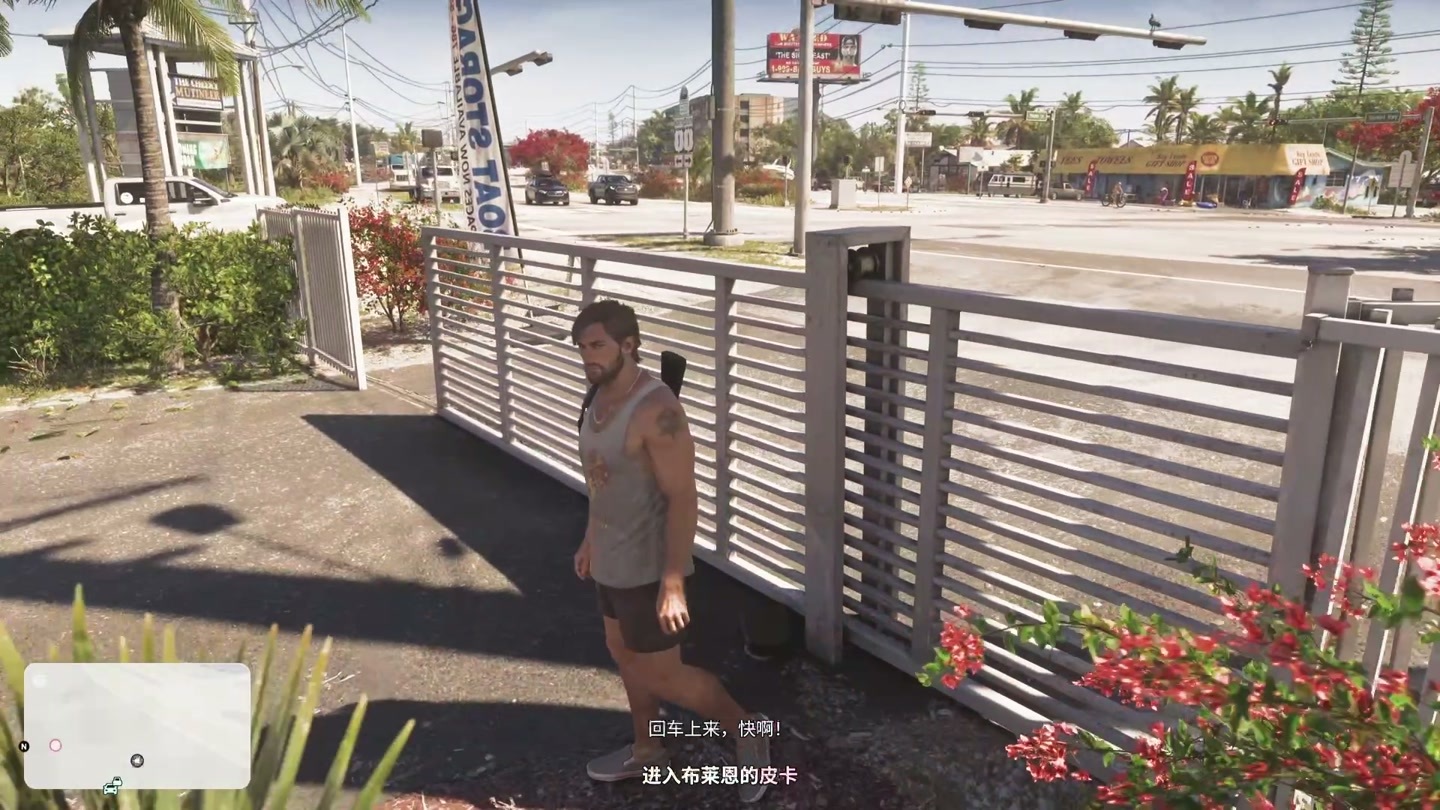
In a Chapter 3 mission, Lucia suggested looking for a window into an antique shop. The player was already on the right route when she asked, “Are you here to sightsee?” They circled the building only to end up back where they had started. In Chapter 1, a gate failed to open as expected. When the player got out to look for a switch, Brian urged them back into the car.
The writer did not want every entrance marked. A building’s layout or a line of dialogue could offer a clue and leave the discovery to the player. What frustrated them was being steered away from a sound decision. In another robbery sequence, three tasks appeared side by side even though access to a door-opening weapon made their order matter. In retrospect, the pawnshop’s lack of a back entrance might have been a hint to try it first. At the time, the clearest signal was the interface, which made all three tasks look equally available.
What does it mean to spare someone?
The writer liked the premise of criminal profiling: two players making different decisions could become recognizably different kinds of criminals. But when sparing someone tended to register as restraint or professionalism, the most interesting part of the decision could disappear. If a character had betrayed the protagonist, letting them live might express either self-control or an unwillingness to face a continuing threat. The story would have to establish which interpretation made sense.
Once the player could anticipate the label, it was easier to choose the profile they wanted than to decide whether the character deserved trust. The writer had questioned some of the moral judgments in Red Dead Redemption too, but found it easier there to understand a judgment in light of the story.
A bank on the map, a reason to wait
By Chapter 3, the player could see large banks on the map and had unlocked bank robberies. Yet according to a guide they consulted, the full vault activity at large banks would not be available until late in Chapter 4. High-end vehicles required tools obtained later, and garage discounts also depended on story progress. Following the story could be a coherent way to learn each system; following an interesting map marker meant wondering whether the trip would be more worthwhile several hours later.
The distinction mattered less at gang hideouts. Different layouts and enemy positions gave the player a reason to stop, observe and plan a fresh approach. At pawnshops, jewelry stores and banks, the writer found that a familiar procedure often worked again. As ways to raise money, extra locations made sense. But each robbery changed its location’s map marker, and reaching 100 percent completion meant clearing a substantial share of them. For someone pursuing completion, more than 30 shops to rob started to resemble the repetitive map checklists often criticized in Ubisoft games.
The cost of a second trip
A hunt for a nocturnal animal brought several of the writer’s objections together. The drive consumed several in-game hours. On arrival, focus mode revealed a tangle of white tracks in an area with dozens of animal species. Then the player discovered they had brought an unsuitable weapon. Another round trip risked using up the remaining darkness, and they had found no convenient way to adjust the time in the field. Travel time, animal schedules and equipment restrictions each made sense in isolation. Together, they left little time for the hunt itself.
This was the first Rockstar game the writer had played in depth, and its cinematic presentation and world simulation made a strong initial impression. They also reported rendering errors, clipping and erratic NPC behavior; bugs led them to play one mission three times and, they said, permanently cost them a reward. But even fixing those problems or raising the frame rate from 30 to 60 would not resolve their main criticism. The gang hideouts showed what they wanted from the rest of the game: a chance to notice something, act on it and understand why the choice mattered.