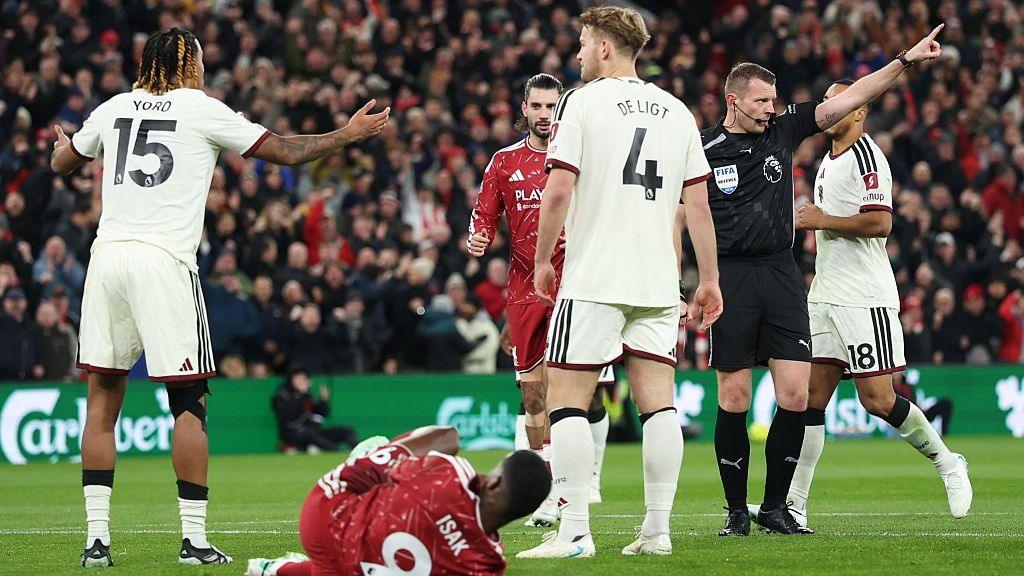
Leny Yoro is available for Manchester United’s match against Brentford on 28 November after a Football Association regulatory commission overturned his red card against Liverpool and lifted his one-match ban. The ruling settled whether Yoro could play. It did not settle the dispute over what the video assistant referee should have done at Anfield.
Referee Sam Barrott sent Yoro off in the eighth minute of United’s 4–0 defeat on 22 November after the defender brought down Liverpool striker Alexander Isak. Video assistant referee John Brooks backed the decision. Whether the foul denied Isak a clear goalscoring chance depended on who would have reached the ball first: Isak or United goalkeeper Senne Lammens.
What United argued
BBC Sport understands United argued that even if Isak had maintained his top recorded speed, he would not have beaten Lammens to the ball. The club said the data could establish that within minutes. United head coach Mauricio Pochettino criticised the video review, and the club felt Brooks had given too little attention to where the ball was heading.
The speed analysis was not available to the match officials. The commission upheld United’s appeal on 24 November, but its written reasons had yet to be published, so it was not clear how much weight the panel gave that evidence.
Why Webb defended the video review
Howard Webb, head of referees’ body Pro Ref, acknowledged the argument that Isak would not have reached the ball. His view was that Barrott’s decision was not “clearly wrong” and therefore did not warrant intervention by Brooks. Although Webb’s comments became public on 24 November, his appearance on Match Officials Mic’d Up was recorded on 23 November, before the appeal was decided.
The threshold for VAR to intervene during a match is considered higher than the one a club must meet on appeal. Premier League clubs, rather than Pro Ref or the FA, set the intervention threshold. In the latest stakeholder survey, 65% wanted to keep it where it was, 20% wanted to raise it and 15% wanted to lower it.
The FA commission’s job is disciplinary: it decides whether the dismissal should stand, not how future matches should be refereed. The club presents its evidence to three panel members, who decide by majority vote. Pro Ref’s only input is the referee’s brief report identifying the law applied. A referee delegate can explain the laws to the panel but cannot give an opinion on the incident.
For guidance on future decisions, Pro Ref gives more weight to the Premier League’s Key Match Incidents Panel, which compiles the referees’ merit table. United’s successful appeal therefore removes Yoro’s suspension without requiring Pro Ref to tell video officials to intervene the next time they see a similar challenge.